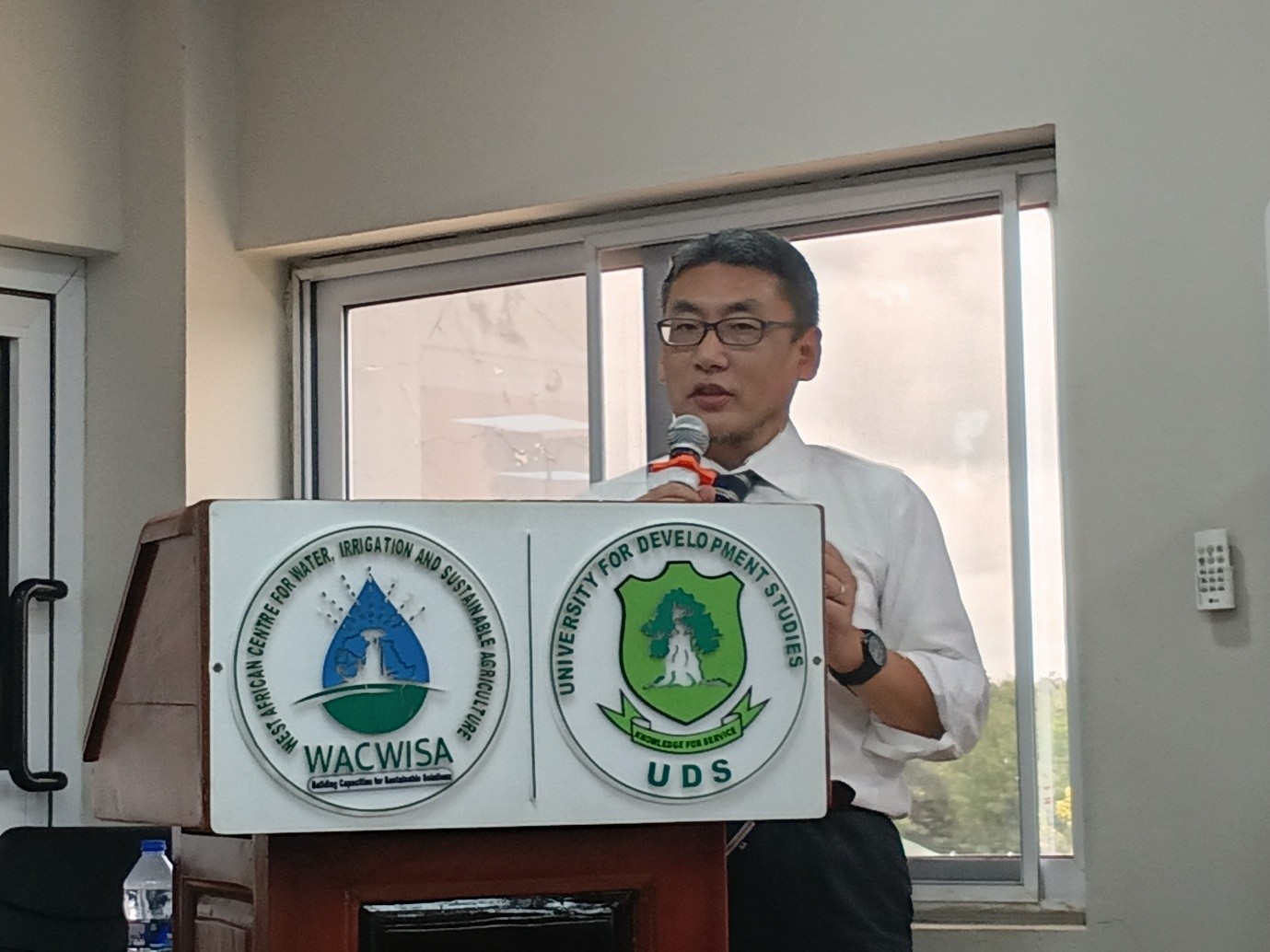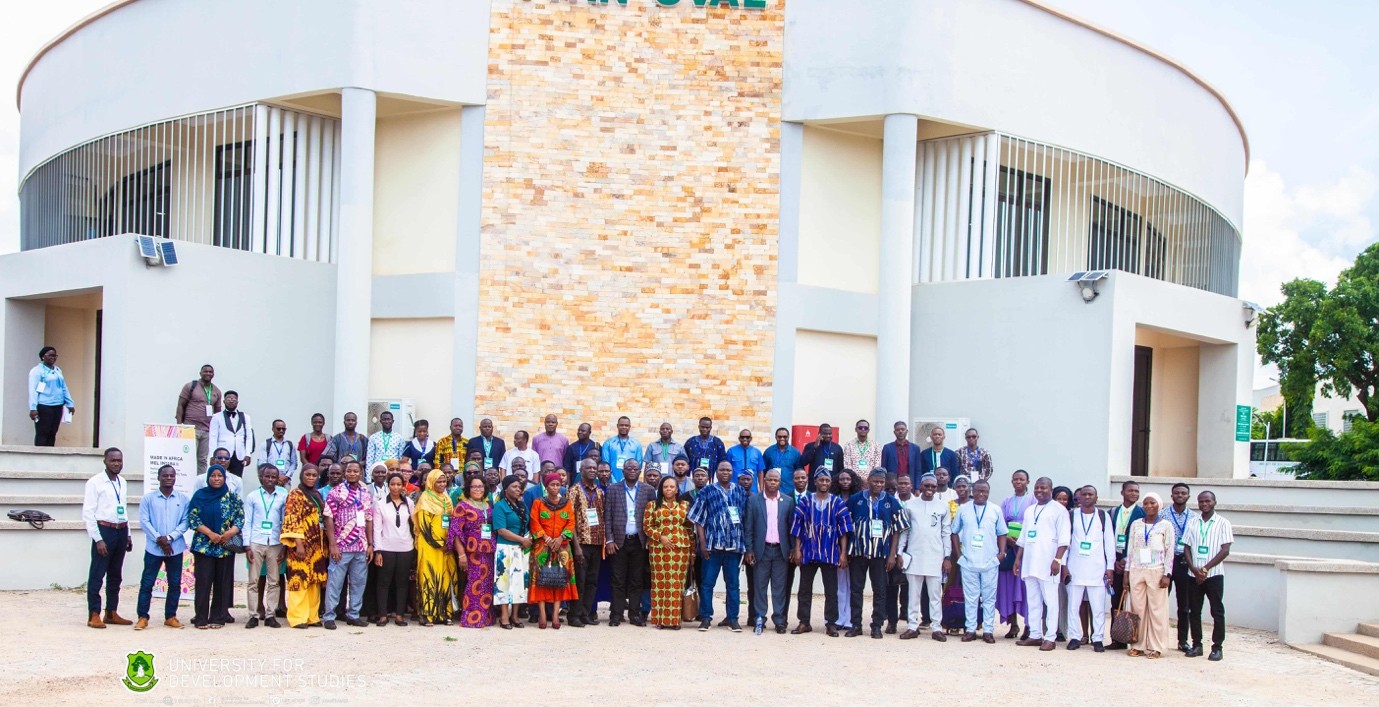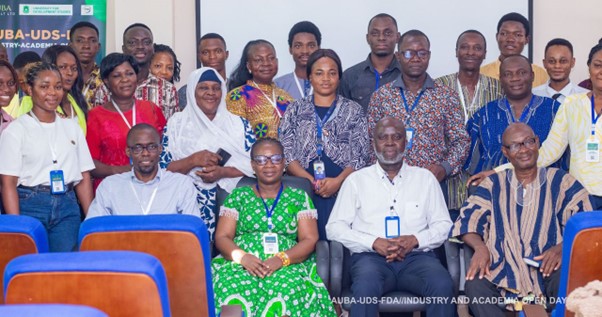
The University for Development Studies (UDS), in collaboration with AUBA Consult Ltd. and the Food and Drugs Authority (FDA), has successfully hosted a two-day Industry and Academia Open Day under the theme “Safe Food, Smart Business: Innovating Quality from Lab to Market.”
The programme, which brought together academia, regulators, industry experts, entrepreneurs, and students, was designed to strengthen collaboration between universities, regulatory institutions, and the private sector in order to improve food safety, innovation, and market readiness within Ghana’s food industry.
Delivering the welcome address, the Dean of the Faculty of Agriculture, Food and Consumer Sciences at UDS, Prof. Terry Ansah, underscored the importance of building stronger linkages between research institutions and industry to promote safe food production and sustainable agribusiness development. “Ensuring safe food and building smart food businesses requires collaboration between academia, regulators and industry. Universities must not only generate knowledge but also translate research into practical solutions that improve food safety, strengthen value chains, and drive economic growth,” he said.
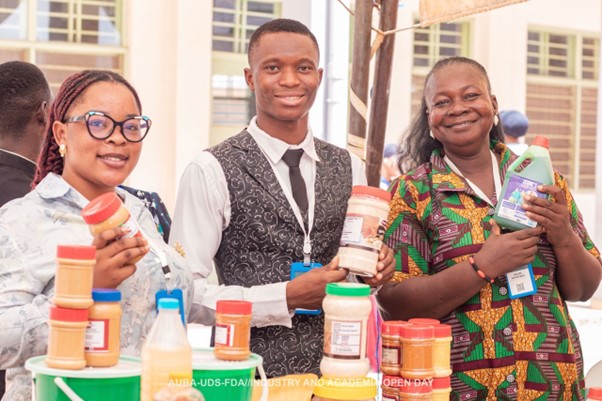
The event also featured exhibition and brand sale stands, where participants displayed food products, innovative processing techniques, and sample products, creating a platform for practical engagement and market exposure for emerging food businesses.
In his presentation on “Harnessing Technology for Food Production,” Senior Quality Control Associate Mr. Felix Aryee highlighted the role of modern technologies in improving food production systems. He noted that technological innovation in processing, preservation, and quality testing can significantly enhance food safety, reduce contamination risks, and help local food enterprises compete in international markets.
Mr. Jonathan Dzakpata, Managing Partner and Principal Consultant of Improvity Consulting, delivered a presentation on Continuous Improvement and Excellence Management, emphasizing the importance of adopting systematic improvement strategies within food businesses. He explained that continuous improvement frameworks help organisations maintain high quality standards, minimize inefficiencies, and strengthen their competitiveness in the food sector.
Addressing regulatory issues, Mr. Zakaria Braimah, Regional Head of the Food and Drugs Authority for the Northern and Savannah Regions, spoke on Food Law and Regulation. He underscored the critical role of regulatory compliance in ensuring consumer safety and building public trust in food products. He encouraged entrepreneurs and food processors to familiarise themselves with regulatory requirements and work closely with the FDA to ensure their products meet national safety standards.
A panel discussion on Academia–Industry–Policy Collaboration brought together experts including Jacob Tetteh Ayin, Jonathan Dzakpata, Zakaria Braimah, Jemila Boye-Okit, Felix Aryee, Prof. Gustav Komla Mahunu, Dr. Alhassan Adams, and Mr. Sumaila Alhassan of the Tree Crop Development Authority (TCDA).
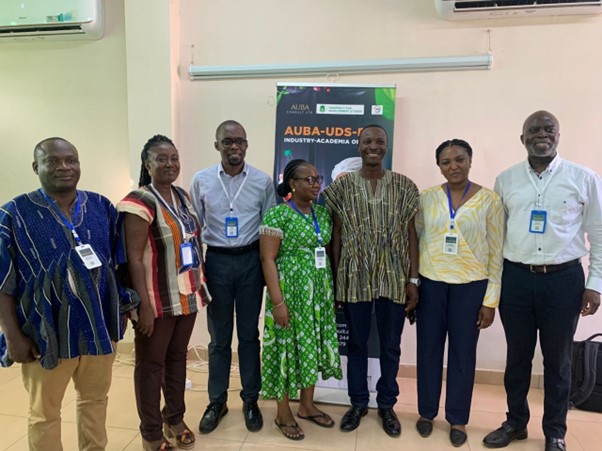
The panel emphasized the importance of partnerships between universities, regulators, and industry players in translating academic research into practical solutions for the food sector. Speakers highlighted that stronger collaboration could accelerate innovation, enhance regulatory compliance, and support the development of competitive food enterprises.
Earlier, Mr. Jacob Tetteh Ayin, Managing Partner of AUBA Consult Ltd., introduced participants to the concept of food quality and safety from a practical industry perspective. He stressed that maintaining food quality requires not only technical knowledge but also strong management systems that guarantee consistency from production to distribution.
Also speaking during the session, Madam Jemila Boye-Okit, Managing Partner and Principal Consultant of Rising Pine Consult Ltd., joined the programme virtually to discuss Entrepreneurship and Career Opportunities in Food Science. She encouraged students and young professionals to explore opportunities in food innovation, product development, and agribusiness, noting that the sector offers immense prospects for job creation and economic growth.
On the second day of the programme, Mr. Jonathan Dzakpata returned with a presentation on “Unlocking Hidden Opportunities: Increasing Profitability with Little or No Capital Investment.” He explained that many food enterprises can improve profitability by identifying operational inefficiencies and reducing waste within their production systems. According to him, businesses can increase their operational capacity without necessarily investing in expensive infrastructure, provided they adopt structured improvement systems and effective management practices.
Mr. Jacob Ayin further provided practical insights into the basics of quality and food safety management systems, highlighting how structured quality assurance frameworks can help businesses maintain product integrity, meet regulatory standards, and access larger markets.
Other distinguished speakers included Mr. Alhassan Sumaila Dubie, Shea Value Chain Specialist at the Tree Crop Development Authority (TCDA), who spoke about opportunities within the shea value chain and the importance of quality standards in expanding international markets.
Mr. Hafiz Ibrahim, Unit Head for Food Production, Enforcement and Inspectorate, discussed the role of regulatory monitoring and enforcement in maintaining food safety across the production and distribution chain.
Mr. Al-hassan Adams, Social Policy Advisor at 24H, also addressed participants, highlighting the broader social and policy dimensions of food safety, including consumer protection, responsible business practices, and the need for evidence-based policy support for food sector development.
The two-day programme provided a valuable platform for dialogue, knowledge sharing, and networking between students, researchers, regulators, and industry professionals. Through its blend of technical presentations, policy discussions, and practical exhibitions, the event demonstrated how collaboration between academia and industry can drive innovation and strengthen food safety systems.
By bringing together experts from regulatory bodies, academia, and the private sector, the AUBA–UDS–FDA Industry–Academia Open Day reinforced the importance of integrating scientific research, regulatory oversight, and entrepreneurial innovation in building a resilient and competitive food industry in Ghana.
The organisers expressed confidence that the insights gained and partnerships forged during the event will contribute significantly to improving food quality standards, supporting agribusiness development, and advancing the shared goal of ensuring safe food and smart food businesses from the laboratory to the marketplace.
Story by:
Hanson Kwadwo Dogli
(UDS Media)
View your student profile, register your courses, etc.
Access learning material on the University's e-Learning platform
Access the University library's resources
Search for and view staff profile